

Are You a Subhuman?
Simone de Beauvoir’s Warning to the World

We are free. We cannot deny this freedom, as it’s an inescapable part of being human. At least, that’s what the existentialist philosophers proclaim.
Simone de Beauvoir is such a philosopher. As an existentialist, she believes that any attempt to escape freedom is illusory, as such attempts are also a choice and, therefore, an act of freedom.
Many people are uncomfortable with such absolute, radical freedom. The idea that they’re the ones in driver’s seat of their own lives frightens them. They try to deny it, turn away from it. But by doing so, they evade responsibility, as they refuse to engage with life and make it a meaningful endeavor.
People that hide from the freedom often do it in curious ways.
They may hide in the shadows, negating themselves. Or they may be overly complacent and conforming to their surroundings, outsourcing their freedom and responsibility. After all: isn’t it much easier to let other people think and make decisions for you? They may even fall for questionable ideologies and become part of hateful echo chambers.
According to Beauvoir, the latter makes such individuals dangerous as they are easily manipulated by forces that would love to use them as pawns.
Beauvoir argued that these deniers of freedom generally fall into two categories: the subhuman and the serious person. (Please note I took the existentialist freedom to use the term “subhuman” instead of Beauvoir’s original term “sub-man” as a universal and ungendered version of the concept.)
From what I’ve discovered studying Beauvoir’s philosophy, the subhuman and serious person serve as examples of what not to do. They form a cautionary tale of what could happen when we deny our inherent freedom; a tale that turns out to be very timely in today’s world of polarization and rampant political populism.
Simone de Beauvoir: A very short background
Simone de Beauvoir was a French existentialist philosopher born in a Parisian bourgeois family. Her father encouraged her intellectual development. As she was good at it, he ironically but proudly exclaimed: “Simone thinks like a man.” Little did he know that she would later become one of the most important figures in feminist thought, writing the groundbreaking work “The Second Sex.”

She had a lifelong partnership with no one less than Jean-Paul Sartre. They were quite the unconventional couple: they had an open relationship based on respecting each other’s freedom (Could it have been be more fitting?), which coincides with their philosophy.
The turmoil of World War II and the challenges of that era deepened Beauvoir’s reflections on themes like freedom, meaning, and responsibility, inspiring her later works, such as The Ethics of Ambiguity.
In this book, Beauvoir explores how to live genuinely in a world without ready-made meaning. She saw life’s freedom as a privilege but also a responsibility. It’s a game that must be played. Whatever we do, we’re always part of that game, even if we refuse to play and sit on the sidelines.
The ambiguity of freedom
What does it mean to be free?
Simone de Beauvoir believed that freedom is inherently ambiguous—we are both free and not free. On the one hand, we are subjects who can make choices and create meaning in life. On the other hand, we are objects to others and are embedded in a world shaped by circumstances beyond our control.
Consider a talented painter with a strong drive to create. She has the materials, space, and income from her day job, so nothing stops her from painting and finding meaning in his work. Yet, she faces constraints: a lack of recognition, financial pressure, and a world more captivated by Netflix than art galleries. Then, a war breaks out, forcing her to enlist in the military and abandon her art.
In the example, we see how the ambiguity of freedom comes with a constant tension between freedom and “facticity,” of which the latter means the “facts” of our situation. Facticity is a set of conditions. They are circumstances that shape our lives. For the painter, it’s her financial situation, global conflicts, and societal trends. Many of these things cannot be changed, but some of them can be overcome.
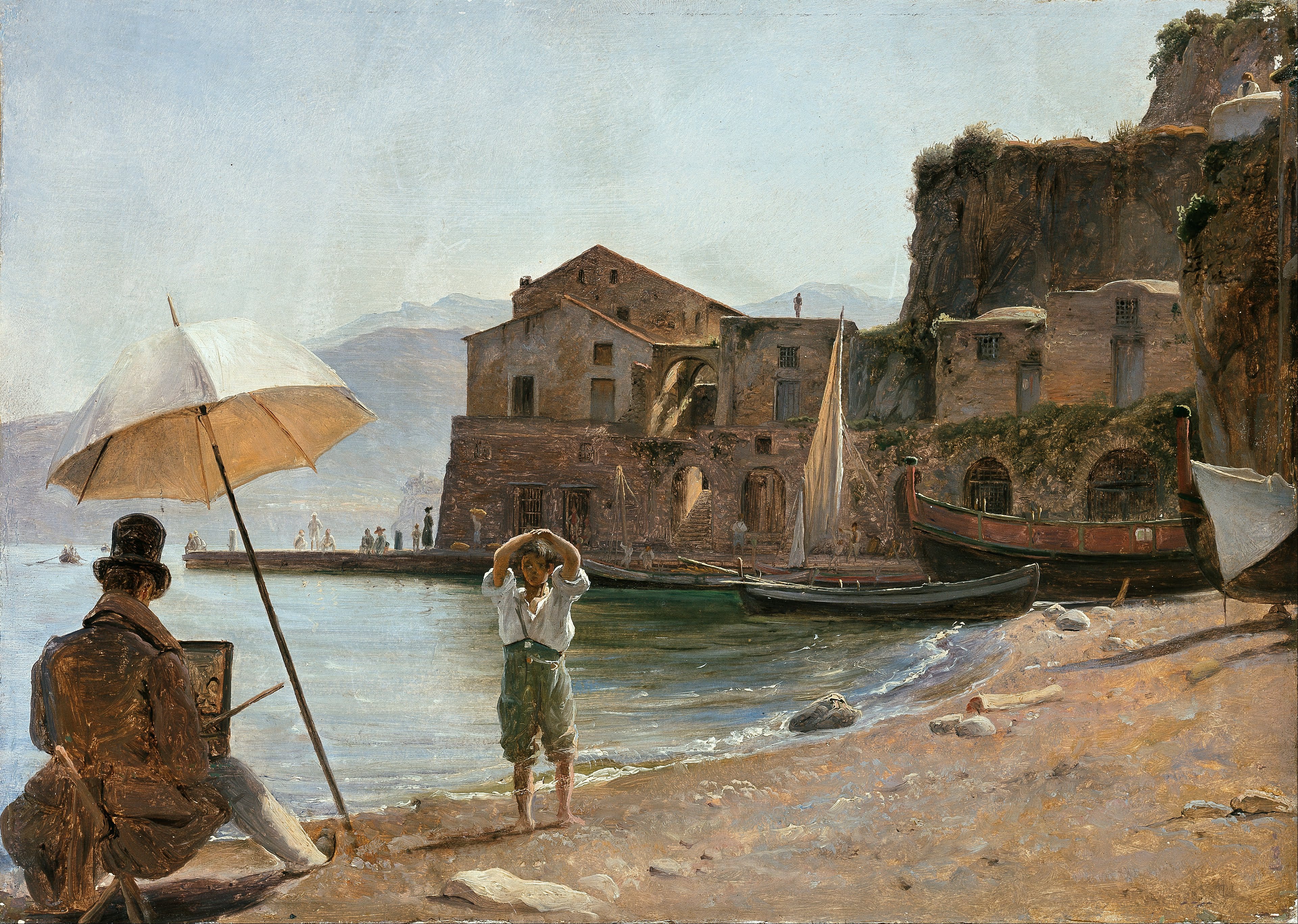
Suppose the painter is an existentialist. As an existentialist, she doesn’t just passively allow herself to be shaped by circumstances. If she did, she would be merely an object, a product entirely formed by outside forces.
An existentialist embraces both object and subject, meaning that the painter actively shapes her life (and, simultaneously, the world) despite the facts of her situation. This dynamic creates tension. It’s subject versus object, imposing versus being imposed on, creating purpose versus becoming subjected to someone else’s.
According to Beauvoir, embracing freedom means transcending one’s facticity and forging an authentic path despite it. I admit, this sounds pretty vague. So, the question is: how do we pull this off?
The answer is complicated.
Beauvoir does not provide fixed morals or ethics to guide us on the path of freedom because freedom is subjective. An individual’s freedom depends on their unique circumstances. It’s personal and theirs to decide. True freedom implies a triumph over facticity, in other words, overcoming the obstacles in the way of one’s authentic path. Yet, this struggle is different for everyone because everyone’s situation is different.
If you aim to be free and then follow some step-by-step guide on how to get that freedom written by, let’s say, someone on YouTube, you’re essentially giving up your freedom. You just surrender yourself to someone else’s blueprint for what life should be like. In the existentialist sense, true freedom means figuring out one’s own direction in life and actively choosing it.
So, if you came here for some ready-made steps on how to live your life, then I have to disappoint you: an ethics of ambiguity can never be universal, or as Beauvoir states:
An ethics of ambiguity will be one which will refuse to deny a priori that separate existants can, at the same time, be bound to each other, that their individual freedoms can forge laws valid for all.
De Beauvoir, Simone. The Ethics of Ambiguity (p. 18). Open Road Media.
But does acknowledging our freedom mean we can do anything we want?
We could, but we better don’t. For Beauvoir, freedom implies responsibility. The world influences and constrains us, but our actions also shape it. If we remain passive, external forces dictate our lives. We are mere objects of our circumstances in that case. But the moment we transcend our conditions and act freely, we impact ourselves and others.
The latter is what many people seem to struggle with. The “I can do whatever I like, when I like it!” attitude gets old pretty quickly if one begins to face the consequences of their actions. And things may get very grim for ourselves and others if we just do stuff without minding the repercussions. Karma is indeed a bitch.
Thus, we must choose responsibly, as our choices will affect people (and ourselves), whether we like it or not. For example, as a content creator with over two million subscribers (Einzelgänger), I should recognize my influence and see it as my responsibility not to spread misinformation or incite harm.
Keeping this in mind, let’s examine Beauvoir’s archetypical attitudes that deny freedom.
The serious person
So, what’s a subhuman? Before this archetype makes sense, we’ll have to dive a bit deeper into what Beauvoir believes is the origin of one’s attitude toward ambiguity: childhood.
The child’s situation is characterized by his finding himself cast into a universe which he has not helped to establish, which has been fashioned without him, and which appears to him as an absolute to which he can only submit. In his eyes, human inventions, words, customs, and values are given facts, as inevitable as the sky and the trees.
de Beauvoir, Simone. The Ethics of Ambiguity (p. 35). Open Road Media.
When we’re still children, we’re not aware of the ambiguity of freedom, which is a natural thing, says Beauvoir. Our parents are godlike, and so are our teachers. To children, the adult world is serious: these big people know what life is all about; they hold the absolute truth about the world. “My momma says…” Well, whatever it is, it’s true.
The child himself isn’t serious. He’s safely living under the eyes of the adults, irresponsibly carefree. Someday, he’ll be part of the ‘seriousness,’ and the absolute world will be accessible to him.
Of course, adults do not have a monopoly on wisdom, and their values and morals are not absolute. As children grow older, they may become aware of how unfounded the adult world is.
Mom’s truisms about how girls are supposed to become mothers and how boys are not supposed to cry: these used to be the absolute truth, but now they sound questionable. Like… why? Who says so? Suddenly, the child realizes there are no fixed roles and laws.
Beauvoir famously stated, “One is not born, but rather becomes, a woman.” Hence, she could very well choose not to. From the existentialist viewpoint, we’re nothingness. Existence precedes essence. We come into this world as empty canvasses, subjected to an ambiguous freedom.
More often than not, this empty, open, and contingent universe in front of them scares people. As children, things were still simple and absolute. As adults, the ambivalence and uncertainty of it all become apparent.
Here’s where the archetype of the ‘serious man’ or ‘serious person’ comes in, which is, according to Beauvoir, most people’s attitude. The serious person denies his freedom. He wants to get rid of it.
The serious man gets rid of his freedom by claiming to subordinate it to values which would be unconditioned. He imagines that the accession to these values likewise permanently confers value upon himself.
De Beauvoir, Simone. The Ethics of Ambiguity (p. 46). Open Road Media.
The serious person is devoted to what he deems a higher purpose that justifies his existence. He seeks identity and meaning in predefined roles, giving him an illusion of absolute purpose and truth. To maintain this illusion, he willingly throws critical thinking overboard. He wants to lose himself in these external entities. Why? Because by doing so, he doesn’t have to think for himself anymore. Big Daddy does it for him, just as his parents did when he was a kid.
Now, which roles are we talking about? It could be anything. Take a mid-level manager, for example, who’s basically everyone’s pain in the ass. His identity is almost entirely submerged in the company. His holy book? The company’s code of ethics. The sacred symbol he proudly carries on his suitcase? The company’s logo. Not to mention the whiteboard in his bedroom showing the company’s mission statement and future growth plan…
Okay, this sounds hyperbolic, but seriously (pun intended), most people seek something external to become a meaning-giving entity. They lose themselves roles—soldiers, fathers, professors, you name it—and the values these roles entail.
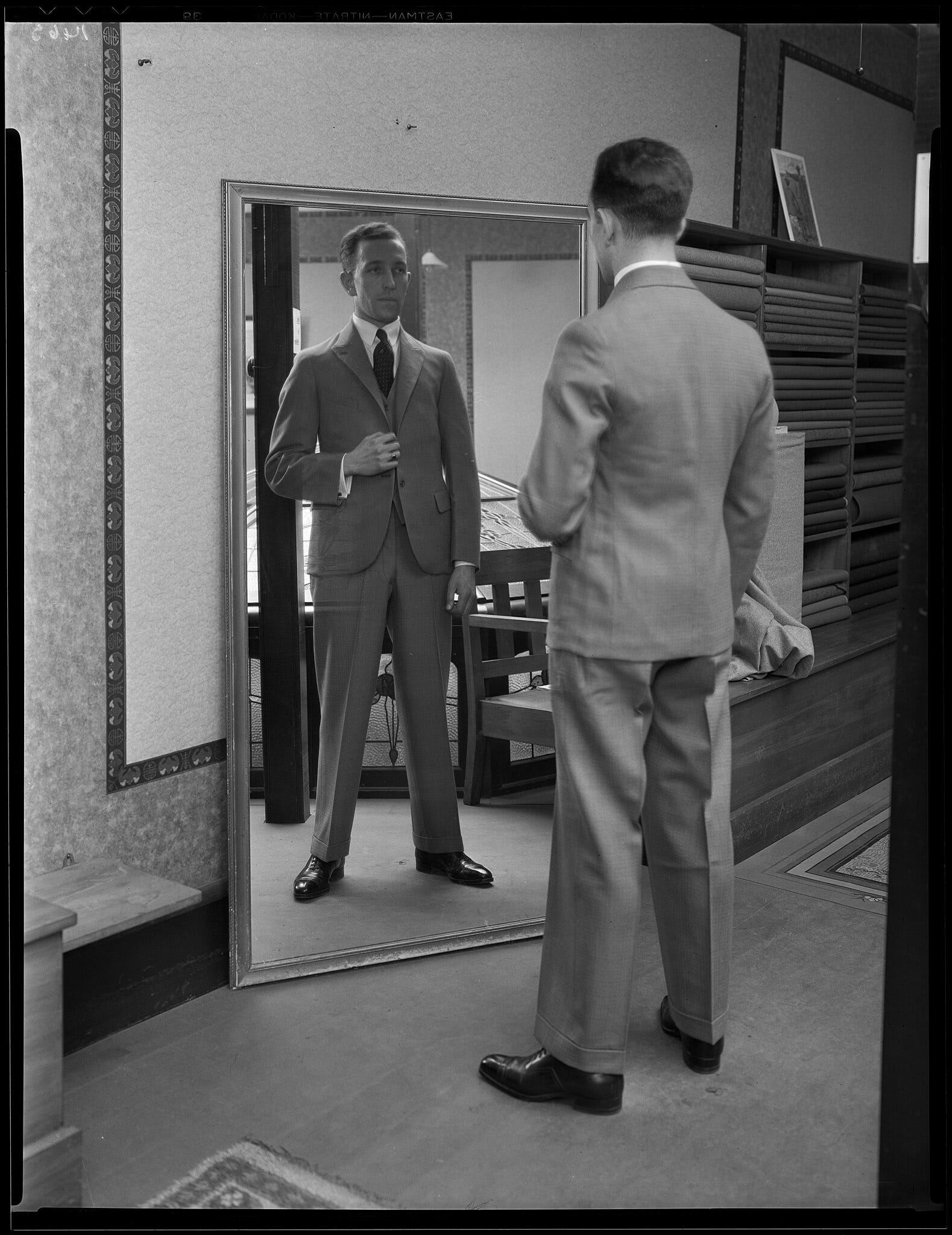
Take a serious person assuming the role of a student, for example. Instead of being merely someone who studies, he begins to act, think, and talk like a stereotypical studious automaton or an archetypical frat boy.
He sacrifices his authenticity, but who cares? He’s now part of the Borg—a safe system that provides stability and a sense of purpose. In this way, the serious person becomes a textbook NPC, moving through life on autopilot and following a script dictated by external values.
The serious person seems selfless, sacrificing himself for the greater good. But there’s a catch: what truly matters to him isn’t so much the cause itself but the opportunity to lose himself in it.
It’s an existential lifebuoy, offering certainty and escape from the ambiguity of freedom. The serious person clings to childhood absolutes: the time when values imposed by authority figures felt unquestionable.
Beauvoir warns this attitude can lead to tyranny, as the serious person prioritizes their chosen system over humanity. For example, someone overly committed to an ideology is likely to ignore the humanity of others, impose his beliefs as absolute truths, and justify harm and oppression in the name of his cause.
However, the serious person can also lose his cause. One day, his system of absolutes could collapse, and he risks sliding into another archetype: the subhuman.
The subhuman
What does it mean to be a subhuman? For some, the term “subhuman” sounds familiar, as it’s a term used by the incel (or involuntary celibate) subculture to describe men that are inferior in terms of physical appearance and status. Beauvoir’s meaning of subhuman is fundamentally different.
From her viewpoint, the subhuman has nothing to do with not having a well-defined jawline. It has nothing to do with being ugly or from a certain “race.” Genetics are irrelevant. Sure, they are a given fact of life that we cannot change, and they may constrain us in certain areas. But they do not restrict the subjectivity of our existence. In other words, we can still create meaning despite our constraints.
Contrary to the incel subhuman, the existential subhuman isn’t a facticity; it’s an attitude.
The subhuman rejects freedom, unlike the serious person, who surrenders it to external values. He drifts through life, letting circumstances like genetics or class define him. They cope through distractions—video games, television, social media.
This mindset overlaps with incels, who fatalistically believe their situation is hopeless. Facticity is everything. “It’s over” is their mantra.
Beauvoir warns that the subhuman is also dangerous. Not only is he passive and indifferent in the face of injustice, he’s an easy target for tyrants and oppressive systems. They adopt ideologies passively, becoming tools for others’ agendas. As Beauvoir states:
One day, a monarchist, the next day, an anarchist, he is more readily anti-semitic, anti-clerical, or anti-republican. Thus, though we have defined him as a denial and a flight, the sub-man is not a harmless creature. He realizes himself in the world as a blind uncontrolled force which anybody can get control of. In lynchings, in pogroms, in all the great bloody movements organized by the fanaticism of seriousness and passion, movements where there is no risk, those who do the actual dirty work are recruited from among the sub-men.
de Beauvoir, Simone. The Ethics of Ambiguity (p. 44). Open Road Media.
From Beauvoir’s perspective, not choosing is still a choice—and a dangerous one. But there’s always a way out. For most of us, freedom is within reach, waiting to be claimed. In The Ethics of Ambiguity, Beauvoir explores how to deal with the complexities of freedom: how to become an existentialist.
This piece first appeared on Einzelgänger as a video essay; it has since been edited and refined for Substack.