

Don’t Deny Your Shadow
A Personal Story

“Projections change the world into the replica of one’s own unknown face.”
Carl Jung
It’s been a while since I’ve discussed Jungian psychology, a topic I’ve often explored in the past. I guess I had a Jungian phase back then. However, I’d like to revisit Carl Jung’s ideas, focusing specifically on the concept of ‘the Shadow’ and a phenomenon known as psychological projection. I find these things very interesting, and I think I’ve encountered some compelling examples of them in my own life.
I’ve based this exploration on a personal experience, one that’s connected to quite a bit of trauma.
An abusive alcoholic
Not too long ago, I had a conversation with my mother about a former relationship of hers, which led to some drastic changes in my life at the time.
When I was around eleven years old, she met a man who was apparently her childhood sweetheart, whom she hadn’t seen for many years. Both already had a couple of kids, went through a divorce, and had several relationships that didn’t work out under their belts. From what I remember, they fell head over heels with each other. For a second time, I guess.
From the get-go, my mom presented him as the most perfect man on the planet. And, well, he had some nice things to show for. He would surely be a great stepdad to us; definitely much better than my own father, which, well, isn’t setting the bar very high.
My mom’s earnest pursuit of this relationship had some significant consequences for my siblings and me, as it meant moving to another town, away from our friends and family. But everything was going to be better, I was told: a new environment, a new school, and a whole new, blended family. After all, this man, this new stepdad, was the man she had been looking for her entire life. He was strong, manly, sweet, caring, and responsible. At least, that’s what it looked like in the early stages of the relationship.
They were never married, by the way, but for simplicity’s sake, let’s just call him my ‘former stepdad’.
Not long after moving in with this former stepdad of mine, cracks began to show. He might have underestimated the magnitude of suddenly having a mother with three children in his house. Whatever it was, he started to show abusive behavior. He yelled, accused, threatened, and literally said he hated my younger brother. And it was clear he also didn’t like me, as he argued I had “no heart.”
I recall vividly that my former stepdad had a distinct aversion to human weakness. There’s a Dutch curse word he’d use all the time, which translates to ‘wussy’ or ‘wimp’. He’d call us that very often, but also his own sons. And he would yell it at the television, too. It didn’t matter who it was: as soon as he saw someone show weakness, he would fly off the handle.
For example, I remember us watching the movie The Fly, starring Jeff Goldblum, in which the main character slowly transforms into a fly, gaining superhuman strength. So, there’s a scene where the protagonist arm wrestles a guy named Marky, and he basically pushes so hard that Marky’s arm snaps, the bone breaking through the skin. Marky screams in agony, and the crowd reacts with shock. I found this a brutal scene. But my former stepdad responded in a way that really surprised me.
He started ridiculing the guy with the broken wrist, angrily calling him a wimp, wussy, whatever, because it’s “just a broken bone,” he argued, and he shouldn’t be such a pussy about it.
I remember I was really stunned at that time by how ruthless this man was when it came to a portrayal of weakness by other men, in this case, Marky screaming in agony because he was in horrible pain and shock at what just happened to him.
So, you can only imagine how he responded when I screamed because I burned my hand on the stove, or my younger brother cried because he fell on his bare knees on the sidewalk while running. There was zero tolerance for crying or moaning because of pain; he would get furious and disgusted by it.
Now, you would expect that a man with such a hatred for human weakness would be a pillar of strength himself. After all, being so judgmental about something you see in other people, kind of requires you not to have that thing you’re judgmental about yourself, right? I mean, if you’re telling someone he’s a bad writer, for example, I’d at least expect that you are a good writer yourself.
Now, here’s a nice twist to the story.
My former stepdad turned out to be a severe alcoholic. My mother didn’t notice it until we had already moved in with him. She heard from his ex-wife that this problem isn’t actually new; his alcohol abuse was the main reason they got divorced! So, my mom realized she had bought a pig in a poke.
People who’ve lived with an alcoholic probably know: these people aren’t fun company when they’re intoxicated. My younger sister recently told me she often feared him when he was drunk, because he became so different and unpredictable. I had experienced the same thing.
At some point, after a year or so, the situation became so dire that my mom rang the alarm bell at the public housing sector: we had to move out quickly. Luckily, they recognized the problem as urgent and secured a rental house for us, allowing us to escape.
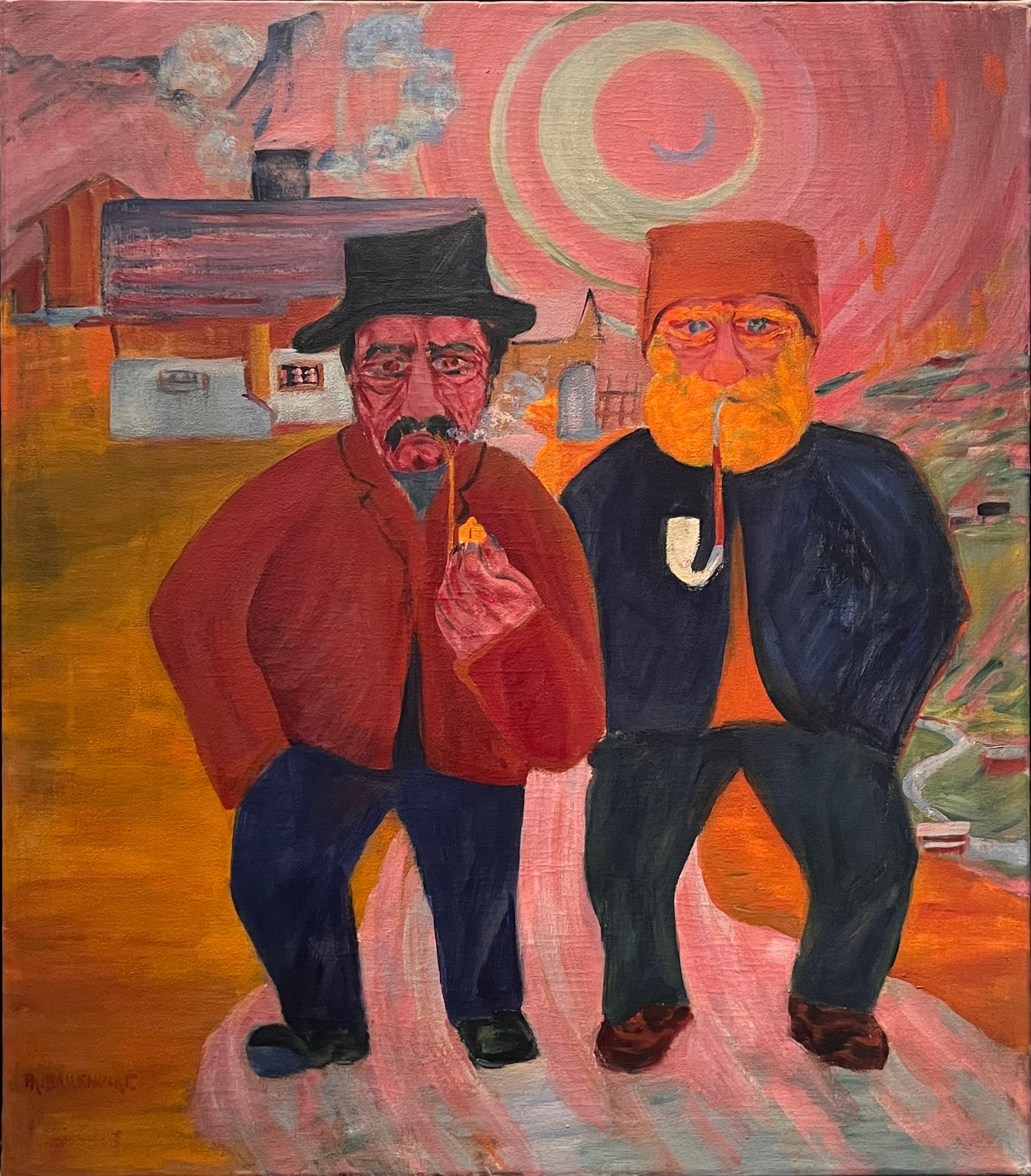
When looking at that situation, I see the irony of it all. This ‘manly man’ called everyone a wussy, but was hardly able to function when things got a bit difficult, and thus escaped to a local pub, drinking until he passed out. If anyone, this man was weak, unable to cope with life. After years of alcohol abuse, he eventually dropped dead at a relatively young age, leaving two sons fatherless.
Later, my mom told me some stories about my former stepdad’s youth, how his father treated him in a tyrannical way, also intolerant of any sign of weakness in his son. He was not supposed to be weak, so he banished his own weakness. He put it in a place, somewhere hidden, where no one would find it, not even he himself.
But, as Jung suggested, you can lock away a part of you in the deepest crypts of the unconscious; that doesn’t mean it’s gone. It’s still there. And out of sight, it begins to live its own life, as an autonomous entity. He wrote:
“Everyone carries a shadow, and the less it is embodied in the individual’s conscious life, the blacker and denser it is.”
Shadow projection
For those unfamiliar with Jung’s concept of the Shadow, let me explain. The Shadow is a collection of unwanted characteristics that lies in the unconscious mind. So, we aren’t directly aware of these characteristics; we might even think we don’t have these attributes, and we most likely do not want them. They were unwelcome at some point in our lives and may still be undesirable to us today.
Such characteristics are typically things unacceptable to our environment. For example, an environment that does not tolerate artists might lead some creative people with artistic tendencies to disown that part of themselves. Thus, it becomes part of the Shadow.
In the case of my former stepdad, and I’m speculating, of course, by disowning his weaknesses, or at least his ability to show weakness, they were likely cast into the Shadow.
Now, according to Jung, one of the consequences arising from having a Shadow, especially a dense one, is psychological projection. Psychological projection occurs when we attribute to others traits, feelings, or impulses that actually belong to ourselves. In other words, we see the world not as it is, but as a reflection of parts of ourselves; often the parts we’d rather not acknowledge.
When it comes to the Shadow, we may not be aware of it directly, but it does appear to us in the world around us. Most people are unaware of this. They lash out excessively at, for example, greedy or aggressive people, but do not really consider the origin of their reactions.
Why do they get worked up so suddenly when they see someone driving an expensive car? Why do they get so angry about the slightest aggression they see on the streets? In the same case, why did my former stepdad get so furious when he saw weakness in other men?
From a Jungian perspective, his Shadow made him hate in others what he had disowned in himself. As he wasn’t supposed to show weakness, nobody was.
So, I guess he experienced this ongoing tension by repressing parts of himself, and I wouldn’t be surprised if that led to his alcoholism. After all, this constant repression and hatred toward himself projected onto others must have been an exhausting, painful state of being. And so it could very well have led to his self-destruction and death.
Projection as a teacher
One of the examples that immediately comes to mind when I think of psychological projection is the character of Frank Fitts in the movie American Beauty. This man espouses a deep hatred of homosexuals, but turns out to be a homosexual himself. So, his hatred was really a reflection of his own repressed desires. Jung would say: he projected his shadow onto the world.
Consider the anonymous trolls who flood YouTube comment sections with obsessive hatred toward people with different sexual orientations. Why are they so occupied with the fact that people of the same sex, whom they probably don’t even know, are being intimate? Where’s the rage and anger coming from? Could it be they are projecting? Could it be that they’re unconsciously fighting their own repressed homosexual feelings? Who knows.
When I look back on my own life, I recall a clear example of my own shadow projection during a time after I renounced intimate relationships.
I told myself I didn’t want a relationship. I didn’t need one. I was perfectly happy alone. But when I saw couples showing affection, or sat at a wedding watching vows being made, I felt irritation. Even anger. How could that be?
Now, how could a supposedly ‘happy single person’ like me be emotionally disturbed by couples showing affection to each other? If anything, I should be happy and elated I wasn’t in their position, right? I rationalized this away by saying that I’m sad that people are taking such risks and will eventually get burned. And that my anger stems from love and a genuine concern for these people. Makes sense, right?
However, Jung would suggest that I might be repressing a need for intimacy, as I see it as undesirable. And so, when I see others being intimate, my own repressed need for intimacy gets triggered.
And now we’re getting to the positive aspect of psychological projection. If you’re able to muster the awareness of your own projections, they can actually teach you something about yourself. For example, my aversion to people being intimate revealed to me that there’s probably some repression going on in that area. Or suppose you have this irrational hatred of artists or other creative people, you might have some repressed desires for creative pursuits that you had to disown, because your parents insisted you’d become a lawyer or doctor.
My former stepdad’s strong aversion to weakness in others could have taught him that he was struggling with a hatred of his own weaknesses, hidden in the Shadow.
Jung also believed that for someone to ‘individuate’ (which means to develop a distinct, complete personality; basically, the process of self-realization), one should integrate the Shadow.
Integrating the Shadow involves bringing unwanted characteristics to the forefront of one’s consciousness and, somehow, giving them a place. In many cases, doing so could drastically improve one’s life, as there’s less repression to fight, less projection, and more acceptance of oneself and others.
Moreover, the things one represses may be valuable: vulnerability can become empathy, creativity can lead to self-expression and new opportunities, and aggression can become a source of energy.
Thus, to stop denying one’s shadow and embracing it can turn an enemy into a friend.
Thank you for watching.
nice, profound read.